
Whether you’re running a commercial fishing vessel out of Port Melbourne, managing a charter fleet on Port Phillip Bay, or operating work boats across Victoria’s inland waterways. A failing marine engine doesn’t just mean inconvenience. It means lost income, safety risks, and costly delays.
The problem most vessel operators face isn’t just the breakdown itself. It’s finding a diesel engine specialist who actually understands marine applications, not just a general mechanic who’ll take a look and hope for the best.
At Elite Mechanical Power, we’ve been diagnosing and repairing marine diesel engines across Melbourne and Victoria for over 25 years. As an authorised Volvo Penta dealer, we work on recreational boats, commercial vessels, and everything in between. Delivering both on-site and workshop-based solutions to get your engine running right.
Why Marine Engine Servicing Is Different to Land-Based Diesel Work
Marine environments are exceptionally demanding on diesel engines. Salt air, moisture, vibration, and variable load conditions create wear patterns that differ significantly from those of trucks or construction equipment. A mechanic without marine-specific training can miss critical failure points that an experienced marine diesel technician will catch immediately.
Here’s what makes marine engine servicing uniquely complex:
- -> Saltwater corrosion attacks cooling systems, injectors, and exhaust components at an accelerated rate
- -> Raw water cooling systems require impeller inspections, heat exchanger maintenance, and zinc anode replacement. Such tasks are rarely needed on land-based engines.
- -> Mounting and alignment issues caused by hull flex can damage shaft seals and gearboxes over time.
- -> Fuel contamination from water ingress is far more common in marine tanks than in road vehicles.
- -> Onboard electrical systems in marine environments require specific wiring and connection standards to resist moisture.
- -> Getting this wrong doesn’t just lead to premature engine failure; it can put crew and passengers at risk.
Common Marine Engine Problems We See in Melbourne and Victoria
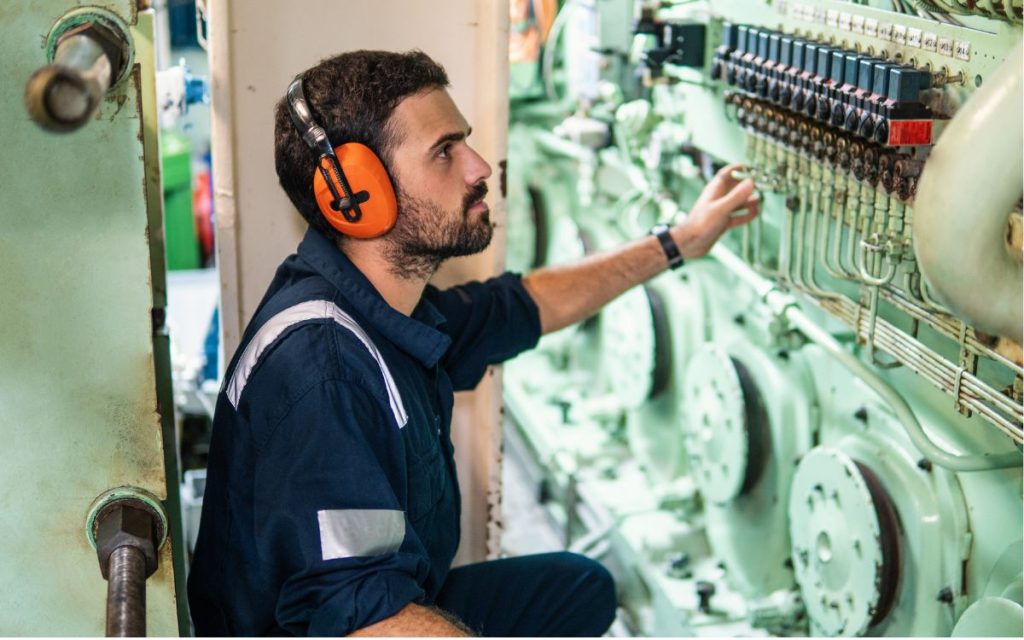
After servicing hundreds of vessels across Port Phillip Bay, the Yarra River, Western Port, and regional Victoria, our team has seen the full range of marine diesel problems. These are the most frequent issues we diagnose and repair:
1. Overheating
One of the most common call-outs we receive. Overheating in marine diesels is most often caused by a failed raw-water impeller, a blocked heat exchanger, or a thermostat failure. Left unaddressed, overheating causes head gasket failure and cylinder damage – both expensive repairs.
2. Hard Starting or Failure to Start
In a marine context, hard starting is frequently linked to fuel system issues and particularly water contamination in the fuel tank or a degraded lift pump. Glow plug failures and low compression are also common culprits, particularly in older engines.
3. Excessive Black or White Smoke
Black smoke typically signals over-fuelling, a clogged air filter, or injector wear. White smoke at operating temperature often indicates water or coolant entering the combustion chamber. A serious warning sign that requires immediate investigation.
4. Loss of Power Under Load
Turbocharger wear, injector fouling, and fuel starvation from blocked filters are the primary causes of power loss in marine diesels. This is a particular concern for commercial vessel operators who rely on consistent power output.
5. Coolant or Oil Leaks
Gasket failures, cracked heat exchangers, and corroded hose connections are all common in marine environments. Water in the oil with a milky appearance on the dipstick is a critical symptom that should never be ignored.
6. Gearbox and Coupling Problems
Gearbox wear, incorrect coupling alignment, and deterioration of flexible couplings are mechanical issues unique to marine applications and often overlooked during standard service intervals.
| Warning Signs – Don’t Ignore These on the Water The engine temperature gauge is climbing above normal operating range Unusual vibration or noise from the engine or drivetrain Milky or grey-coloured oil on the dipstick Loss of raw water flow is visible at the exhaust outlet Difficulty engaging or disengaging the gearbox Sustained fuel consumption increase without explanation The engine is dying under load or at idle |
Expert Advice from Elite Mechanical Power
Our lead technicians have worked across a broad range of marine diesel engines – from Volvo Penta IPS and shaft drive systems through to Yanmar, Cummins Marine, and Caterpillar power plants. Here’s what we recommend every vessel operator in Victoria should know:
- -> Service intervals aren’t optional. Marine diesels should be serviced at least annually or every 250 hours, whichever comes first. Many commercial operators run 150-hour intervals in high-use applications.
- -> Raw water impellers should be replaced every season, regardless of apparent condition. A failed impeller can destroy a heat exchanger in minutes.
- -> Fuel polishing matters. Marine fuel tanks accumulate water and microbial contamination over time. Regular fuel polishing and tank inspections prevent injector damage and filter blockages.
- -> Don’t leave boats unused for extended periods without fogging the engine. Acid wash from combustion residue causes internal corrosion when engines sit idle.
- -> Always investigate your zincs. Sacrificial zinc anodes protect your hull fittings, shaft, and rudder from galvanic corrosion. Replace them before they’re fully consumed.
These aren’t generic tips; they’re based on what we actually see in our Melbourne workshop and during on-site callouts across Victoria.
Preventative Marine Engine Maintenance: What a Professional Service Includes
A thorough marine engine service from Elite Mechanical Power goes well beyond an oil and filter change. Our standard preventative maintenance for marine diesel engines includes:
| Service Area | What We Check and Address |
| Engine Oil & Filters | Drain, replace, and inspect oil for signs of contamination or wear metals |
| Raw Water System | Impeller replacement, heat exchanger flush, hose and clamp inspection |
| Fuel System | Filter replacement, injector inspection, fuel lines and primer pump check |
| Cooling System | Thermostat test, coolant condition, freshwater pump inspection |
| Belts & Hoses | Visual inspection and replacement of degraded components |
| Electrical Systems | Battery condition, alternator output, and wiring inspection for corrosion |
| Gearbox & Coupling | Oil level, clutch engagement, coupling condition check |
| Exhaust System | Inspection for leaks, corrosion, and back-pressure issues |
| Engine Mounts | Check for deterioration and correct torque |
| Zinc Anodes | Inspect and replace as required |
See our full Engine Repair and Maintenance Services page for more details on what our inspections cover.
When to Call a Marine Engine Specialist
Not every symptom requires emergency help, but some situations warrant immediate professional attention. Contact Elite Mechanical Power without delay if:
- -> Your engine overheats and doesn’t recover after shutting down and checking coolant levels
- -> You have oil or coolant in the bilge that wasn’t there previously
- -> The engine starts throwing alarm codes or warning lights that you haven’t seen before
- -> You notice fuel in the bilge – a potential fire hazard that must be addressed immediately
- -> The gearbox fails to engage, leaving you without propulsion
- -> Your vessel is due for a survey,y and you need a certified mechanical inspection
For commercial operators, we also strongly recommend a pre-season inspection before your busiest operational period. Catching issues in the workshop is always less disruptive and less expensive than a breakdown at sea.
For emergency support, see our Emergency Diesel Breakdown Service page.
Why Melbourne’s Marine Operators Choose Elite Mechanical Power
There’s no shortage of diesel mechanics in Melbourne. But marine engine work is a specialised discipline, and choosing the right team matters. Here’s why fleet managers, commercial operators, and recreational boaters across Victoria trust us:
| What Sets Us Apart Authorised Volvo Penta Dealer – factory-trained technicians and genuine parts 25+ years of marine, industrial, and construction diesel experience On-site and workshop servicing – we come to you when needed Servicing Melbourne and all of Victoria, including regional and coastal areas Experienced with commercial fishing vessels, charter boats, work boats, and recreational craft Full diagnostic capability including electronic engine management systems Transparent quoting – no hidden charges, no unnecessary workEmergency breakdown support available |
Whether you’re running a single recreational vessel or managing a commercial fleet, we bring the same level of professionalism and technical rigour to every job.
Learn more about our Marine Engine Services or explore our Workshop Capabilities.
Frequently Asked Questions
How often should a marine diesel engine be serviced in Melbourne?
Most marine diesel manufacturers recommend a service every 250 engine hours or annually – whichever comes first. In high-use commercial applications or harsh saltwater environments, we generally recommend 150-hour intervals. A pre-season service before summer is also a good practice for vessels that sit idle over winter.
Can Elite Mechanical Power service my vessel at its berth?
Yes. We provide on-site marine engine servicing across Melbourne and Victoria. Whether your vessel is berthed at Williamstown, Docklands, Mornington, or a regional marina, our team can come to you for scheduled maintenance and most diagnostic work. Larger overhauls and component rebuilds are typically completed in our workshop.
What marine engine brands do you service?
We are an authorised Volvo Penta dealer, and our primary specialisation is in Volvo Penta marine engines. We also service and repair Yanmar, Cummins Marine, Caterpillar, and other major marine diesel brands. Contact us to confirm coverage for your specific engine make and model.
What’s the difference between a service and a marine engine overhaul?
A service covers routine maintenance for oil and filter changes, impeller replacement, cooling system checks, and so on. An overhaul involves disassembling the engine to inspect or replace internal components such as pistons, liners, bearings, and cylinder heads. We recommend an overhaul when compression is significantly below spec, when the engine has high hours, or when there’s evidence of internal damage from overheating or contamination.
How do I know if my marine engine has a head gasket problem?
Common signs include white smoke from the exhaust at normal operating temperature, coolant loss without visible leaks, oil that appears milky or frothy on the dipstick, and bubbles in the coolant reservoir. If you notice any of these symptoms, stop operating the engine and contact a specialist. Running an engine with a blown head gasket can cause severe and expensive internal damage.
Do you provide emergency marine engine callouts in Victoria?
Yes. We understand that marine breakdowns don’t follow business hours. Contact Elite Mechanical Power to discuss emergency support options for your vessel. We service customers across Melbourne and regional Victoria and can advise on the fastest path to resolution for your situation.
Conclusion
A well-maintained marine diesel engine is the foundation of a safe, reliable, and profitable vessel operation. Whether you’re dealing with an urgent repair, approaching a service interval, or planning a pre-season inspection, working with a specialist who understands marine applications isn’t optional; it’s essential.
Elite Mechanical Power brings over 25 years of diesel engine expertise, Volvo Penta dealer authority, and deep familiarity with Melbourne’s marine environment to every job. We’re not a generalist workshop that occasionally sees boats for marine, industrial, and construction; diesel is all we do.
If you’re based in Melbourne or anywhere in Victoria and need a marine engine specialist you can trust, get in touch today.