
Heavy equipment is expensive to buy, expensive to run, and even more expensive to replace early. The difference between a machine that lasts a decade and one that fails well before its time usually comes down to how consistently it gets serviced.
Construction equipment maintenance is not just about avoiding breakdowns. It protects the safety of everyone working around the machine, keeps fuel and repair costs under control, and preserves resale value when it eventually leaves the fleet.
This guide sets out how often heavy equipment should be serviced, from daily checks through to annual inspections, and what each stage of construction equipment servicing should cover.
Why Regular Construction Equipment Maintenance Matters
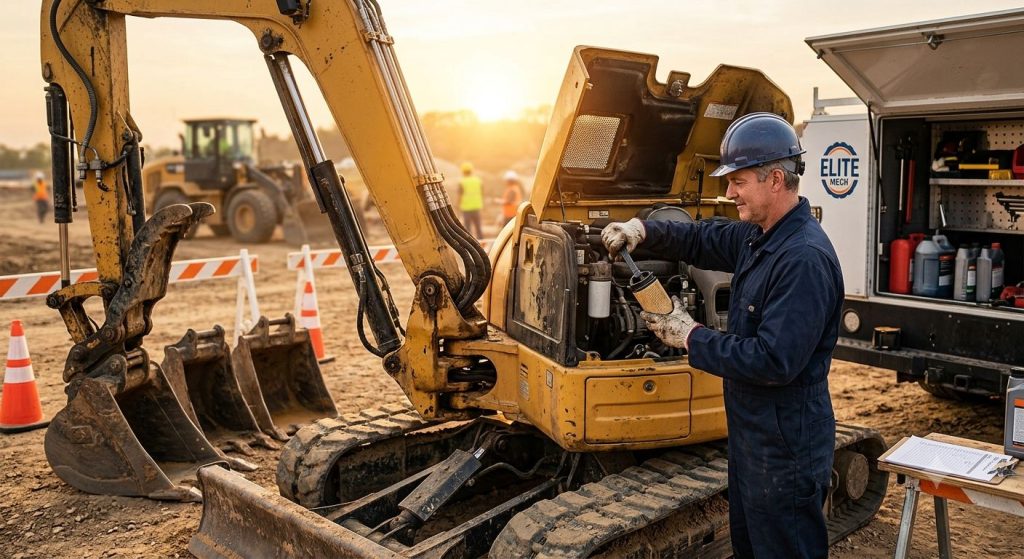
A structured maintenance routine pays for itself many times over across the life of a machine.
– Reduced downtime: a machine serviced on schedule breaks down far less often.
– Longer equipment lifespan: consistent care slows the wear that eventually retires a machine.
– Improved fuel efficiency: clean filters and well-tuned engines burn less fuel for the same work.
– Lower repair costs: small issues caught early are cheaper than the major failures they cause if ignored.
– Better workplace safety: well-maintained brakes, hydraulics and steering protect everyone on site.
– Increased productivity: reliable equipment keeps projects moving without unplanned delays.
– Higher resale value: a documented service history reassures buyers and supports a stronger sale price.
Heavy machinery maintenance is not an added cost so much as insurance against a much larger one down the track.
Daily Operator Checks
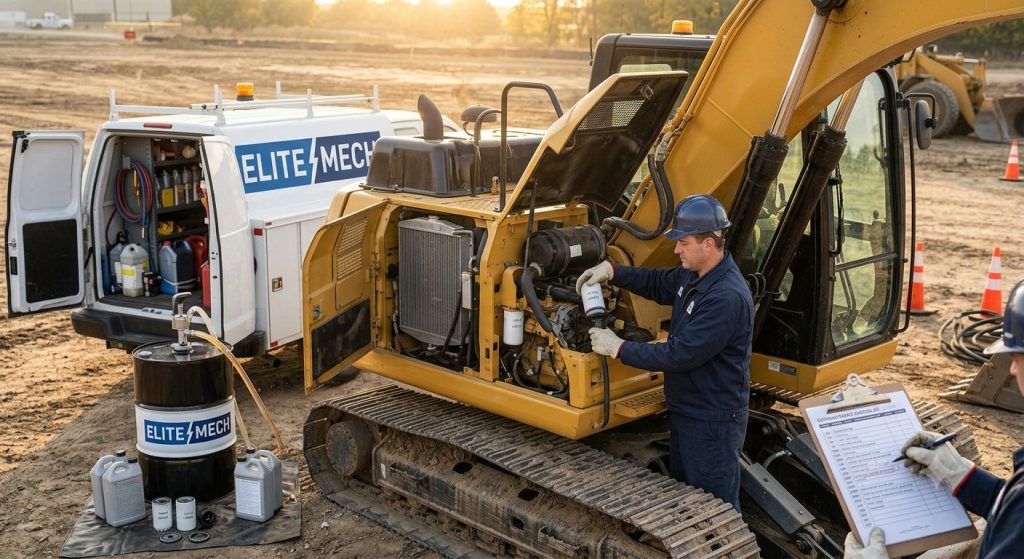
The most valuable maintenance often happens before the engine even starts working for the day.
A quick daily check should cover:
– Engine oil level
– Hydraulic fluid level
– Coolant level
– Fuel system for leaks or contamination
– Tyres or tracks for wear and damage
– Hoses and belts for cracking or fraying
– Battery condition and connections
– Lights and warning indicators
– Grease points on pins and joints
– Visible leaks anywhere on the machine
– Safety equipment, including alarms and fire extinguishers
If you notice persistent oil leaks, excessive smoke, or a loss of power during these daily inspections, it may indicate a more serious engine issue. Learn about the common signs of heavy equipment engine problems before they lead to costly repairs.
None of these checks takes more than a few minutes, but skipping them is how a small, cheap fix turns into an unplanned breakdown mid-shift. Operators are often the first to notice a problem, simply because they are in the machine every day.
Scheduled Servicing Intervals (Hour-Based)
Beyond daily checks, most heavy equipment follows a set of hour-based service milestones. Always follow the manufacturer’s specific recommendations, since intervals vary between machines, but the pattern below is typical.
| Service Interval | Recommended Maintenance | Why It Matters |
|---|---|---|
| Every 50 hours | Visual inspection, grease points, fluid top-ups | Catches early wear before it spreads |
| Every 250 hours | Oil and filter changes, hose inspection | Protects engine and hydraulic components |
| Every 500 hours | Hydraulic system inspection, cooling system check | Prevents major failures and overheating |
| Every 1,000 hours | Undercarriage inspection, electrical system check | Identifies wear before it becomes costly |
Diesel-powered machinery also benefits from following a structured diesel engine maintenance schedule, especially for engine oil, fuel filters and cooling system inspections.
Following this kind of schedule, rather than servicing only when something feels wrong, is the core of effective construction equipment maintenance.
Seasonal and Annual Servicing
Hour-based servicing covers routine wear, but equipment also benefits from checks tied to the calendar rather than the clock.
Before a busy season starts, a comprehensive inspection, battery test and cooling system flush help confirm the machine is ready for sustained heavy use. Air conditioning is worth checking before summer, since cab comfort affects operator concentration on long shifts.
At the end of a season, servicing before storage helps prevent corrosion and makes the machine easier to bring back into service later. Annual inspections often catch hidden wear, such as early corrosion or a slowly failing seal, well before it turns into a costly repair.
Routine servicing also makes it easier to identify developing diesel engine problems before they result in expensive downtime or major component failures.
Record-Keeping and Compliance Considerations
A maintenance schedule is only as useful as the records that back it up.
Keeping service records, inspection reports, repair history, warranty documentation and safety inspection results in one place makes fleet management far easier. Accurate records help during audits, support warranty claims, and give buyers confidence if a machine is sold later.
They also make preventive planning simpler. A clear history shows exactly when a component is due for attention, rather than relying on memory or guesswork across a fleet of machines. Elite Mech technicians often refer to this kind of history when diagnosing recurring issues, since patterns in the records can point directly to the cause.
Common Maintenance Mistakes to Avoid
Even experienced operators and fleet managers fall into habits that shorten equipment life.
– Skipping scheduled services: delaying a service to keep a machine working often costs more once a small issue grows.
– Ignoring warning lights: modern equipment flags problems early, and dismissing an alert removes that warning.
– Delaying hydraulic repairs: a small leak left alone can lead to a failed pump or cylinder.
– Using incorrect fluids: the wrong oil or hydraulic fluid accelerates wear on internal components.
– Failing to replace worn filters: blocked filters force engines and pumps to work harder than they should.
– Overlooking operator inspections: skipping daily checks removes the earliest warning system a fleet has.
Warning lights should never be ignored, as they are often the first sign of an underlying mechanical fault. Understanding common diesel engine troubleshooting tips can help operators recognise problems early.
When to Book a Professional Construction Equipment Service
Operators can handle daily checks and basic care, but some situations require a qualified technician.
For excavators, symptoms such as slow hydraulic movement, unusual noises or excessive exhaust smoke often indicate it’s time for professional repairs. Read about the signs your excavator needs repair to know when immediate servicing is recommended.
Here is what typically happens during a professional construction equipment service:
1. Diagnostic assessment to identify any faults beyond routine wear.
2. A full report outlining what was found and what it means.
3. A quote for any repairs before work begins.
4. Servicing or repair work, using appropriate parts and specialised tools.
5. A final check to confirm the machine is safe and ready to return to work.
Preventive servicing, done on schedule, is almost always cheaper than emergency repairs after a breakdown. Elite Mech’s experience with construction equipment means problems are often caught during a routine visit, before they become one.
Key Takeaways
– A structured maintenance schedule reduces downtime, extends equipment life and protects resale value.
– Daily operator checks are the simplest and most effective form of preventive maintenance.
– Hour-based servicing, typically at 50-, 250-, 500-, and 1,000-hour intervals, catches wear before it spreads.
– Seasonal servicing prepares equipment for heavy use and prevents corrosion during storage.
– Accurate service records support audits, warranty claims and stronger resale value.
– Skipping services or ignoring warning lights are among the most costly maintenance mistakes.
– Hydraulic issues and unusual noises should prompt a professional inspection, not a wait-and-see approach.
– Preventive servicing is consistently cheaper than emergency repairs after a breakdown.
Consistency Matters More Than the Calendar
How often you service heavy equipment matters less than how consistently you do it. Daily checks, scheduled hour-based servicing, seasonal attention and accurate records all work together to keep a fleet reliable.
Equipment maintained on a structured schedule simply costs less to own over its lifetime, in fuel, repairs and downtime, than equipment serviced only when something goes wrong.
Make Maintenance Part of the Routine
Consistent construction equipment maintenance is one of the few investments that pays for itself every time a breakdown is avoided. A structured schedule, followed properly, keeps machines working and keeps costs predictable.
Elite Mech provides servicing, diagnostics and repairs for construction equipment across Victoria. Their Construction Services page covers routine servicing, breakdown repairs and preventive maintenance for excavators, loaders and other heavy machinery. Get in touch to schedule a service or request a quote.
Frequently Asked Questions
How often should heavy construction equipment be serviced?
Most machines need basic checks daily, with more thorough servicing at set hour intervals, commonly 50, 250, 500 and 1,000 hours. Always follow the manufacturer’s specific schedule.
What happens if maintenance of construction equipment is delayed?
Delayed maintenance allows small issues, like a dirty filter or a minor hydraulic leak, to develop into major failures. This usually costs far more than the original service would have.
Do older machines need more frequent servicing?
Often yes. Older equipment tends to wear faster and benefits from closer monitoring, even if the manufacturer’s original intervals stay the same.
Why is record-keeping important for construction equipment?
Accurate records support warranty claims, help with compliance audits, and give buyers confidence in the machine’s condition if it is sold later.
How do I choose a reliable construction equipment service provider?
Look for genuine experience with heavy machinery, proper diagnostic equipment, and a preventive maintenance approach rather than one that only responds to breakdowns.